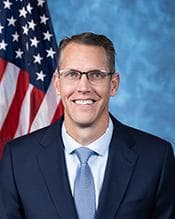
Feenstra, Randy
Contact
2434 Rayburn House Office Building Washington DC 20515-1504
Campaign Finance (2026)
Funding Sources
Top Industries
Source: FEC · 2026 cycle
About
Randy Feenstra represents Iowa's 4th congressional district, which spans the state's western border and northwestern region, including cities like Sioux City, Ames, Council Bluffs, and Marshalltown. First elected to Congress in 2020 after defeating incumbent Steve King in the Republican primary, Feenstra brought over a decade of state legislative experience to the House. Before his election to Congress, he served in the Iowa Senate from 2009 to 2021 and previously held positions as Sioux County Treasurer and city administrator of Hull. His professional background also includes work in sales management and business operations.
In Congress, Feenstra serves on two major committees: the House Committee on Agriculture and the House Committee on Ways and Means. Within these committees, he focuses on agricultural issues including livestock, dairy, poultry, and conservation, as well as tax policy, work and welfare matters, and Social Security. His legislative work reflects his district's agricultural heritage and his background in both public administration and business.
Feenstra has sponsored numerous bills during his tenure, including measures related to quantum technology, agricultural cost-sharing programs, and tax administration. He is currently pursuing higher office, having announced his candidacy for the Republican primary in the 2026 Iowa gubernatorial election, which will lead to his retirement from Congress.
AI-generated biography · Sources include Wikipedia (CC BY-SA)
Recent Votes (10)
On Agreeing to the Resolution - H.Res. 1142: Providing for disposition of the Senate amendment to the bill (H.R. 7147) making further consolidated appropriations for the fiscal year ending September 30, 2026, and for other purposes.
On Ordering the Previous Question - H.Res. 1142: Providing for disposition of the Senate amendment to the bill (H.R. 7147) making further consolidated appropriations for the fiscal year ending September 30, 2026, and for other purposes.